My boss singles me out what to do: He Didn’t Argue Back
my boss singles me out what to do? Promoted to supervisor for six months, Fang Lei faces increasingly demanding weekly report requirements and constant veiled criticism from his boss in meetings. When the new system malfunctions, though the deadline was clearly finalized by the boss in the group chat, Fang Lei is set to take the fall at the accountability meeting. Retired colleague Lao Wu shares stories of Xiao He and Guo Ziyi, noting that holding a precarious position without running into trouble is itself a real skill.
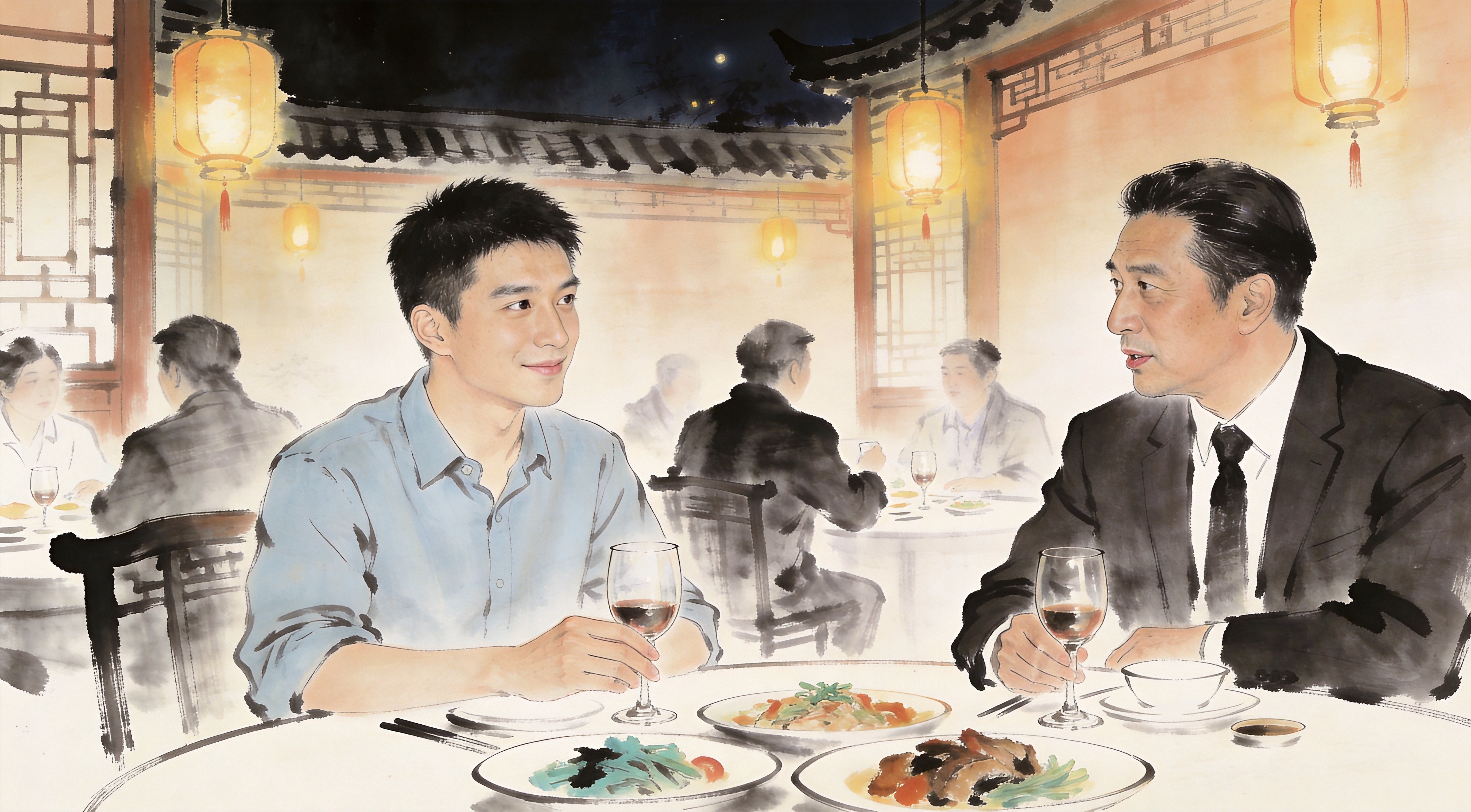
Six months after being promoted to supervisor, Fang Lei started to sense something was off.
After Zhao Qiming was transferred away, he took over as head of the technical department. At first, the boss would pat him on the shoulder and tell him to keep up the good work. But then, weekly reports turned into reports every three days. In meetings, the boss would make vague, pointed remarks: "Now that you've moved up in rank, don't let your guard down." Even when Fang Lei took clients out for dinner, the boss would casually ask, "Who did you eat with?"
He worked past ten o'clock every day, yet the feeling of being watched grew stronger by the day. *my boss singles me out what to do* — he had searched this phrase on his phone more than once.
The real crisis came during that system launch. The boss had finalized the deadline in the group chat: "We have to launch. If there's a problem, I take responsibility." On launch day, the system crashed for two hours.
The accountability meeting was dead silent. Fang Lei had that group chat message saved on his phone — if he pulled it up right then, he could clear his name instantly. But the moment the message lit up the screen, the boss's authority would crumble to dust.
*blamed for my boss's mistake what to do, why does it have to be me* — these two thoughts stuck in his throat the whole way to the meeting.
In the end, he didn't take out his phone.
On the weekend, he brought a bag of fruit to visit Old Wu. Old Wu had retired four months prior, and his balcony was lined with orchids. After listening to Fang Lei's story, he poured tea slowly and unhurriedly.
"The year I became a supervisor," Old Wu said, "the big boss asked me three times a day, 'What are you busy with?' At first I was flattered, but later I figured it out — that wasn't concern. That was distrust."
"Xiao He, the prime minister of the Han Dynasty, went through the same thing." Old Wu set down the teapot. "When the emperor was fighting on the front lines, he kept sending people back just to ask, 'What is the Prime Minister doing?' You think he was thinking of Xiao He? He couldn't sleep at night worrying."
"What did Xiao He do then?"
"He made sure the boss could sleep soundly," Old Wu said. "He sent all his capable relatives to the front to fight, turned down rewards and titles, and donated his family wealth to the army. That chair you're sitting in — you can't reach the boss's desk from it, and you can't step back down to your old workstation. You're hanging in midair. Being watched comes with the position. It's not that you have a problem. It's that the chair has a problem."
Fang Lei was quiet for a long time. "But this time, it's really not my fault."
Old Wu nodded and refilled his tea.
"Guo Ziyi, a great general of the Tang Dynasty, had his ancestral tomb dug up. The whole court knew who did it, and even the emperor was sweating bullets, afraid he'd turn his troops against the court. But when he met the emperor, he cried: 'I've led troops for decades, and my men have dug up plenty of people's graves. This is punishment from heaven for my disloyalty and unfilial conduct, not a man-made disaster.' With one sentence, he defused a huge crisis."
"Did he really not know who did it?"
"He knew better than anyone." Old Wu looked at him. "But he could count the cost clearly: if you fight to win that argument, you win the moral high ground but lose the whole game. Do you want to be proven innocent, or do you want to get through this? Innocence comes from arguing; getting through comes from yielding. Even if you win the argument, you still lose."
Fang Lei's throat felt tight. "But I feel wronged."
"Feeling wronged is exactly how it should be," Old Wu said. "In the *I Ching (Book of Changes)*, there's a line in the Qian hexagram (The Creative) that specifically talks about this kind of suspended position — four characters: 終日乾乾 (Vigorous All Day Long). It doesn't mean you have to work harder. It means that for this position, just keeping things from going wrong is already a skill. If your grievance doesn't turn into a real problem, then it's nothing at all."
"I've kept all the evidence," Fang Lei said.
"Good that you kept it." Old Wu smiled. "Holding the cards in your hand gives you confidence. Throwing them on the table? That's called flipping the table."
That night, he thought about it all night. Early the next morning, he knocked on the boss's office door. He didn't explain, didn't complain about being wronged. He just handed over three pages of paper: how to fix the fault, how to improve the process, which checkpoints were missing. The boss flipped through it and was silent for a long while. "Do it this way."
In the meeting, he took responsibility for the execution side: "The risk warning wasn't thorough enough." He didn't say a word about the decision-making. From that week on, he proactively cc'd the boss on his weekly reports. Whenever there was the slightest sign of trouble with a project, he sent an update before the boss could ask. When he won an award at the end of the year, he put his team's names first.
Gradually, the boss stopped asking questions. Not because he trusted Fang Lei now, but because there was nothing left to ask about.
No one ever mentioned that system failure again. *my boss singles me out what to do* — six months ago, seeing those words would make him zone out for half an hour. Now, he just swipes past them with his finger.
On Wednesday night at 9:40, he finished his weekly report, added the boss's name to the cc line, hit send, and closed his laptop.
The subway downstairs was still running.