Is It Hard to Step Back After Success? He Can’t Stop Even When His Company Is on Track
Is it hard to step back when you’ve reached the top? Lin Yue built his company into a top-three industry player in three years, yet he started suffering from insomnia. He revised plans until the wee hours every day and even reviewed new hires’ weekly reports. Old Wu’s words woke him up: Han Xin could command thousands of troops but couldn’t manage his own fate. Knowing when to stop is the final lesson.
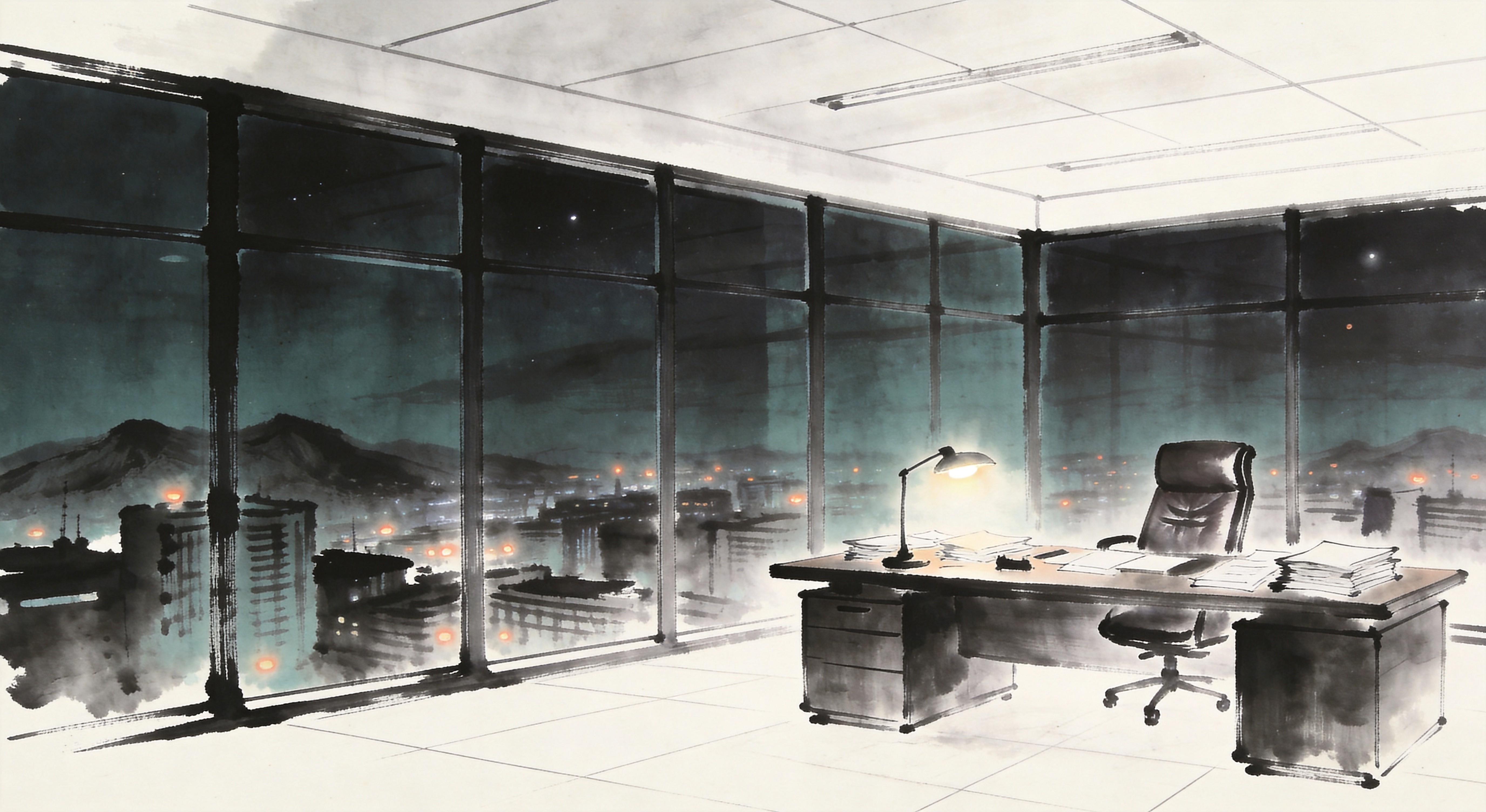
Lin Yue had been suffering from insomnia for nearly two months straight.
It wasn’t that the company was in trouble—quite the opposite. Three years prior, he’d learned to delegate authority: handing core clients over to department heads and giving decision-making power on proposals down to his teams. The company had actually gotten back on track. Last year, revenue doubled; this year, it climbed into the top three in the industry. He’d taken the CEO seat, and his office moved from the sixth floor to the penthouse.
But here was the problem: he couldn’t slow down.
Before, he’d been busy with concrete tasks—revising proposals, courting clients, putting out fires. Now, he was busy with work he’d dug up for himself: personally overseeing every version of the new product line prototype, interviewing every newly hired director, even editing the annual meeting plan drafted by the admin team word for word. He knew this wasn’t right—what kind of manager micromanages everything? The more he took on, the fewer people there were who could manage things for him. But the moment he set down his work, his chest tightened with anxiety: “What if something goes wrong?”
Is it hard to step down when you’ve reached the top? He’d never thought about that question before. Back then, all he’d thought about was how to climb higher. Now that he’d made it to the top, he found there was nowhere left to go up—and no way back down, either.
On the weekend, he went to visit Old Wu. Old Wu was even thinner than he’d been three years ago. His insulated mug had been swapped for an even older one, and the number of orchids on his balcony had doubled. He didn’t stand on ceremony when he saw Lin Yue: “You look worse than last time.”
Lin Yue laid everything out on the table. Old Wu listened in silence for a long while, then finally asked: “Do you know how Han Xin died in the end?”
Lin Yue was caught off guard.
“He was tricked into the Changle Palace, beheaded in the bell chamber, and his entire clan of three generations was executed.” Old Wu set down his insulated mug. “Right before he died, he said—‘I regret not following Kuai Tong’s plan.’ What he regretted was not taking Kuai Tong’s advice to split the empire three ways. But he never figured it out, even at the end: the real regret isn’t not taking one more step forward—it’s not taking one step back sooner.”
Lin Yue didn’t respond.
“Han Xin had a skill they called ‘the more, the merrier’—he could lead any number of troops. But he had a flaw: he could command thousands of armies, but he couldn’t lead himself. Once the wars were over, he didn’t know what to do next. He couldn’t stop—not that he didn’t want to, but if he stopped, he wouldn’t know who he was anymore.”
Old Wu glanced at him: “You’re just like him right now. It’s not that you don’t trust others to do the work—it’s that you’re afraid once you stop, you’ll be nothing. From having nothing to having everything, your identity is the only thing you’ve got. Strip away that identity, and you’re nobody.”
Lin Yue still didn’t say a word.
“There’s another saying—when the cunning hares are dead, the good hound gets cooked. Han Xin saw that pattern, but he only saw it when he was already tied up. If you wait until that day to see it, it’ll be too late.”
Old Wu stood up to water his orchids, and with his back to Lin Yue, he said: “亢龙有悔 (Arrogant Dragon Brings Remorse)—I’ve never flown high, but I’ve never fallen hard either. Those of you who have flown should know when to land.”
On Monday, Lin Yue did three things.
He handed daily operations over to three vice presidents, keeping only strategic direction for himself. He set a “Three No’s Principle”: no personally revising proposals, no personally handling customer complaints, no personally interviewing entry-level staff. He only went into the office three days a week.
The first month brought two mishaps: one proposal was rejected by a client, and a major account was nearly lost. Every time, he wanted to charge in and handle it himself; every time, he held back. He walked the person in charge through post-mortems and let them fix things on their own.
The second month, on a project he hadn’t meddled with at all, the lead landed a client he’d never been able to win over before—using a method he’d never thought of.
Is it hard to step down when you’ve reached the top? He still didn’t have the answer. But he’d realized one thing: it took him ten years to go from having nothing to having everything. Going from having everything to knowing when to stop? That was something he still had to learn.
Saturday morning, there was no alarm. He woke up naturally, didn’t check his phone, and lay there for ten minutes. Birds were singing outside the window. He thought of the basement apartment he’d rented ten years ago—back then, he had nothing, but he was afraid of nothing.